
Empowering Educational Leaders Through STEM, AI, and Innovation
Join us for the first Annual Atlantic Innovative Education Summit, a two-day in‑person gathering for educational leaders and educators across Atlantic Canada.
Designed to advance STEM, AI, and purposeful technology integration, the summit fosters focused conversations, practical insights, and meaningful peer connections. Supported by an online professional learning community to continue collaboration, sharing, and growth beyond the two days.
Access to a Vibrant Online Community
May 7 | Leadership Day - May 8 | Educators Day
Four Points, Moncton, NB
Summit Agenda
Join us for two days of learning and Connection
Check in, get settled, and start connecting with fellow attendees.
Ramy Ghattas, CEO and Founder of Logics Academy.
Ryan Donaghy, Deputy Minister of Education and Early Childhood Development for New Brunswick
Randolph J.MacLEAN, Superintendent of Anglophone East School District
Jordan Smith, Subject Coordinator: Educational Technology, Artificial Intelligence, Innovation and Science of New Brunswick & 2025/2026 AIE Steering Committee Chair
Student panel highlighting student voice, perspectives, and experiences with learning, technology, and innovation.
Networking break and refreshments.
Education leaders from across Atlantic Canada share updates on provincial priorities, programs, and system‑level approaches to innovation and AI in education.
- New Brunswick: Sarah Rankin & Jeff Whipple
- Nova Scotia: Chris Cocek
- Prince Edward Island: Sam Livingstone & Dylan Mullally
- Newfoundland: Tony Hiller
Lunch and networking.
AI Readiness Across Canada: Policy to Practice
Roundtable Leads: Chris Cocek & Sam Livingstone
This collaborative workshop brings together educators and leaders to explore where provinces and regions are in their AI policy development and classroom integration. Through guided discussion and activities focused on people, policy, pedagogy, and processes, participants build a shared understanding of AI readiness and leave with clear next steps, inter-provincial connections, and resources to support future planning.
Traditional Knowledge in a Modern World
Roundtable Lead: Denis Roy (Outdoor Land-Based Experience)
Through an "On the Land" learning session, participants will immerse themselves in Wabanaki worldviews, culture, and traditional knowledge. We will explore the Mi'kmaq's traditional relationship with the forest, focusing on the medicinal, culinary, and cultural uses of tree parts—including wood, bark, leaves, roots, and resin. Central to this experience is the concept of Netukulimk: the practice of drawing from nature's bounty for the well-being of the individual and community while ensuring the environment's integrity and productivity remain protected for future generations.
STEM Maker Spaces: Hands-On Learning in Action
Roundtable Leads: Laura Kennedy, Krista LeBlanc, Jarrod Baker, Derek Tangredi
This interactive workshop introduces educators to practical ways to design and use STEM maker spaces—large or small—to support creativity, problem-solving, collaboration, and curriculum outcomes. Participants explore low-cost materials, hands-on challenges, and classroom-ready activities, while learning how to connect maker learning across subjects and grade levels. Everyone leaves with ready-to-use ideas, setup strategies for different budgets, and maker items created during the session.
Build Your Evaluation Tool: Technology & AI
Roundtable Lead: Jordan Smith
This hands-on session helps educators move beyond adopting technology to evaluating its impact on learning. Participants use a simple decision-making lens and build their own Evaluation Hub (NotebookLM, Copilot Notebook or other) using curriculum, district documents, and AI guidelines.Participants use a simple decision-making lens and build their own NotebookLM Evaluation Hub using curriculum, district documents, and AI guidelines. By applying the process to real examples, educators leave with a practical, repeatable way to assess technology and AI use—and make informed decisions to scale, refine, or stop.
Refreshment and transition break.
AI Readiness Across Canada: Policy to Practice
Roundtable Leads: Chris Cocek & Sam Livingstone
This collaborative workshop brings together educators and leaders to explore where provinces and regions are in their AI policy development and classroom integration. Through guided discussion and activities focused on people, policy, pedagogy, and processes, participants build a shared understanding of AI readiness and leave with clear next steps, inter-provincial connections, and resources to support future planning.
Traditional Knowledge in a Modern World
Roundtable Lead: Denis Roy (Outdoor Land-Based Experience)
Through an "On the Land" learning session, participants will immerse themselves in Wabanaki worldviews, culture, and traditional knowledge. We will explore the Mi'kmaq's traditional relationship with the forest, focusing on the medicinal, culinary, and cultural uses of tree parts—including wood, bark, leaves, roots, and resin. Central to this experience is the concept of Netukulimk: the practice of drawing from nature's bounty for the well-being of the individual and community while ensuring the environment's integrity and productivity remain protected for future generations.
STEM Maker Spaces: Hands-On Learning in Action
Roundtable Leads: Laura Kennedy, Krista LeBlanc, Jarrod Baker, Derek Tangredi
This interactive workshop introduces educators to practical ways to design and use STEM maker spaces—large or small—to support creativity, problem-solving, collaboration, and curriculum outcomes. Participants explore low-cost materials, hands-on challenges, and classroom-ready activities, while learning how to connect maker learning across subjects and grade levels. Everyone leaves with ready-to-use ideas, setup strategies for different budgets, and maker items created during the session.
Build Your Evaluation Tool: Technology & AI
Roundtable Lead: Jordan Smith
This hands-on session helps educators move beyond adopting technology to evaluating its impact on learning. Participants use a simple decision-making lens and build their own Evaluation Hub (NotebookLM, Copilot Notebook or other) using curriculum, district documents, and AI guidelines.Participants use a simple decision-making lens and build their own NotebookLM Evaluation Hub using curriculum, district documents, and AI guidelines. By applying the process to real examples, educators leave with a practical, repeatable way to assess technology and AI use—and make informed decisions to scale, refine, or stop.
Reflection on the day, highlights, and participant feedback to inform future AIE work.
Optional evening social event for networking, conversation, and connection.
Arrive, check in, and get settled for a full day of hands‑on learning, collaboration, and inspiration.
Ramy Ghattas, CEO and Founder of Logics Academy.
Randolph J.MacLEAN, Superintendent of Anglophone East School District
Jordan Smith, Subject Coordinator: Educational Technology, Artificial Intelligence, Innovation and Science of New Brunswick & 2025/2026 AIE Steering Committee Chair
Student panel highlighting student voice, perspectives, and experiences with learning, technology, and innovation.
Adam Binet – Anglophone East School District
Current student projects and initiatives, including AI, STEM clubs, video production, and more.
Tammy Reece – Anglophone East School District
Water Rangers water quality testing (Anglophone East data bank) and learning through the school’s outdoor classroom.
Clayse Randow Rangel Nunes – Anglophone East School District
Student-facing Padlet designed to support individual learning needs through personalized and accessible resources.
Ryan Bucci – HRCE
Custom apps for Grades 7–8 that support learning through practical “vibe coding,” including interactive literacy, numeracy, and real-world simulation apps.
Jullie Pelletier – Anglophone East School District
Canva AI classroom applications.
Tara Earle – Anglophone East School District
Minecraft and Canva Restaurant Project using digital design and world-building tools.
Amanda Auffrey – Anglophone East School District
Cross-curricular multicultural robotics parade combining Art and Technology.
Amanda Harding – Anglophone East School District
AI-supported hall pass monitoring system.
Chantal Groulx – Anglophone East School District
Pixar-style storyboard writing and movie creation.
Ben Kelly – Anglophone East School District
Classroom projects using experiential AI, game-based learning, and selected Logics Academy resources.
Jeff Hennigar – HRCE
Classroom projects using experiential AI, game-based learning, and Logics Academy resources.
Robert (Brant) Guimond – Anglophone East School District
QR code digital library.
Ashley Savoie – Anglophone East School District
Micro:bits and B.Board classroom projects.
Lise LeBlanc – Anglophone East School District
Ozobot Community Project.
Andrew Harris – ASDE / ASD-East
The Hobbit book study.
Danielle Leonardi – Northrop Frye School
Tale-Bot Pro and Activity Box.
Sarah Morley – ASD-E
Cross-curricular stop-motion projects (Explore Your World, English Language Arts, Visual Arts).
Ashley McDade – Anglophone South School District
Showing various innovation projects from this school year
Refreshments and networking.
| Room 1 | STEM, Robotics, Makerspace | Room 2 | AI in education | Room 3 | Evaluation & Curriculum | Room 4 | AI, Curriculum | |
|---|---|---|---|---|

Jarrod Baker
Curriculum Consultant - Anglophone East (NB)
|

Sam Livingstone
Education Technology Leader - PEI Dept. of Education
|

Anna Doucette
Curriculum Consultant - Anglophone East (NB)
|

Ryan Bucci
Teacher & Educational Content Creator - HRCE (NS)
|
|
|
Magnifying Curiosity
|
NotebookLM for Educators
|
School AI Simplified: Real Ideas for Real Classrooms
|
Educators as Builders: Vibe Coding
|
|
This professional learning session invites educators to explore the use of digital microscopes as tools for experiential learning, supporting curiosity, observation, and sense making in science classrooms. Participants learn how to set up and use digital microscopes while engaging in inquiry based, hands-on investigations aligned with the experiential learning cycle and inquiry process, from concrete observation to reflection and application. The session emphasizes practical classroom strategies that help students ask questions, gather evidence, and deepen understanding through direct interaction with real-world phenomena. |
Join Sam for a hands-on opportunity to explore Google’s NotebookLM and the new NotebookLM Studio. NotebookLM is redefining how educators manage, synthesize, and share information with colleagues and students. Unlike standard AI tools, NotebookLM is source‑grounded—it generates responses only from the documents you provide, keeping your curriculum accurate, transparent, and firmly in your control. |
Curious about using AI in your classroom but not sure where to start? This session breaks down School AI into simple, practical steps you can use right away. You’ll learn how to turn basic prompts into engaging lessons, student supports, and exciting new activities —no tech expertise required. Walk away with ready-to-use ideas, real examples, and the confidence to bring School AI into your everyday teaching. |
What happens when a teacher stops waiting for the perfect EdTech tool and just builds it themselves? This session is a practical, real-world look at what vibe coding actually looks like in a middle school classroom — no computer science degree required. Over the past two school years, Ryan Bucci has been designing and deploying interactive apps for his Grade 7 and 8 students using Replit and AI-assisted vibe coding. In this session, he'll walk through real examples of tools he built, tested, and iterated on with his students — showing how any educator can move from idea to working classroom tool faster than they think. |
Lunch break and opportunities to connect with fellow educators and presenters.
| Room 1 | STEM, Robotics, Makerspace | Room 2 | AI in education | Room 3 | Evaluation & Curriculum | Room 4 | AI, Curriculum | Outdoor | Land based learning |
|---|---|---|---|---|

Kate English & Melissa Wentworth
Curriculum Consultant - CCRCE (NS) & Technology Integration Specialist - CCRCE (NS)
|

Jeff Raine
Curriculum Consultant - Tri‑County RCE (NS)
|

Jeff Hennigar
Teacher - Halifax RCE (NS)
|

Derek Tangredi & Steve Bampton
Sr. Education Strategist - Logics Academy & Technology Lead - Anglophone East (NB)
|

Denis Roy
Indigenous Educational Support Teacher - Anglophone East (NB)
|
|
The Future Is Floating: Build Your Own AR Holograms
|
Cross-Curricular Planning with NotebookLM and Gemini
|
Accessibility in a Snap: Canva AI tools for UDL
|
Microsoft Copilot for Teaching & Learning
|
Traditional Knowledge in a Modern World
|
Ready to bring your students' 3D creations to life? Join us for a hands-on exploration of CoSpaces Edu (by Delightex) where we’ll turn digital designs into "floating" holograms. |
Leverage the power of NotebookLM and Gemini to make your planning more intentional, targeted, and best of all, easier. First, we'll look at how NotebookLM can be used to focus in on the outcomes and materials specific to your class in order to ensure that cross curricular learning is as congruent with your curricula as possible. Then, we'll take things one step further by looking at how Gemini Gems(or Claude Skills) can be used to streamline your work flow by dialing it in to produce lesson plans that perfectly match your teaching style, or creating gems to help generate prompts for other AI like NotebookLM so you get consistent results. |
Discover how Canva’s AI tools make Universal Design for Learning (UDL) possible with just a few extra clicks. |
Explore practical, classroom-ready uses of Microsoft Copilot, Learning Accelerators, and AI tools in Microsoft 365 Education. This hands-on session shows educators how to save time, personalize learning, and support students using tools like Teach and Create—responsibly and effectively. |
Through an "On the Land" learning session, participants will immerse themselves in Wabanaki worldviews, culture, and traditional knowledge. We will explore the Mi’kmaq’s traditional relationship with the forest, focusing on the medicinal, culinary, and cultural uses of tree parts—including wood, bark, leaves, roots, and resin. Central to this experience is the concept of Netukulimk: the practice of drawing from nature’s bounty for the well-being of the individual and community while ensuring the environment's integrity and productivity remain protected for future generations. |
Afternoon refreshments.
| Room 1 | Stem robotics, coding, makerspace day | Room 2 | AI in education | Room 3 | Evaluation & Curriculum | Room 4 | AI, Curriculum | Outdoor | Land based learning |
|---|---|---|---|---|

Derek Tangredi
Sr. Education Strategist - Logics Academy
|

Roy Francis
Educator (NS)
|

Beth Doiron
Numeracy Coach / Support Teacher - Anglophone East (NB)
|

Ben Kelly
Educator - Anglophone East (NB)
|
Denis Roy
Indigenous Educational Support Teacher - Anglophone East (NB)
|
|
Build, Code, and Learn. A Hands-On Introduction to VinciBot for the Classroom
|
Digital Co‑Teacher: AI in Action
|
Using Nearpod to collect feedback in your Math classes.
|
Teaching Artificial Intelligence with Minecraft Education
|
Traditional Knowledge in a Modern World
|
Uncover learning with us in this hands‑on session, educators will learn by doing, building, testing, and iterating with VinciBot through a constructionist lens. VinciBot supports block based coding and progression into Python, making it accessible for beginners while still offering meaningful depth for experienced teachers/students. |
Imagine a classroom where students can interact with virtual mentors, research, brainstorm generate ideas, and receive personalized feedback on their writing—all within minutes. This presentation will explore how integrating AI in the classroom can unleash creativity, personalize learning experiences, and prepare students for future careers. We'll explore the AI tools and ways that my students and I classes. We'll discuss the benefits, challenges, and practical strategies for implementing AI tools effectively in educational settings. Together we will explore tools for your classroom and start to create a set of tools that are ready for you to use with your classes. You'll need a chromebook or Laptop for this session. Bring along a list of tasks that AI could help you or your students and get ready to walk away with a digital co-teacher! gicschool.ai, Schoolai, Canva, Gemini will be the primary tools/platforms featured in the session. |
Participants will join a Nearpod session as "student" participants in order to see interactions from the student perspective. Discussions will be had on how to access the Nearpod library and how to create simple custom activities. This platform encourages engagement and can be an effective way to collect formative data. |
Learn from a Global Minecraft Education Ambassador and Anglophone East STEM teacher about the possibilities for using Minecraft Education in the K-12 classroom to introduce and explore artificial intelligence concepts. You’ll see engaging resources and teaching supports that help to introduce AI to elementary students and ready-to-go exploratory experiences for upper grades. Build challenge ideas that can demonstrate student understanding will also be shared. A complete game-based learning AI experience package awaits. |
Through an "On the Land" learning session, participants will immerse themselves in Wabanaki worldviews, culture, and traditional knowledge. We will explore the Mi’kmaq’s traditional relationship with the forest, focusing on the medicinal, culinary, and cultural uses of tree parts—including wood, bark, leaves, roots, and resin. Central to this experience is the concept of Netukulimk: the practice of drawing from nature’s bounty for the well-being of the individual and community while ensuring the environment's integrity and productivity remain protected for future generations. |
Closing reflections, key takeaways, and next steps as participants wrap up the day and prepare to bring ideas back to their classrooms and schools.
What You’ll Explore
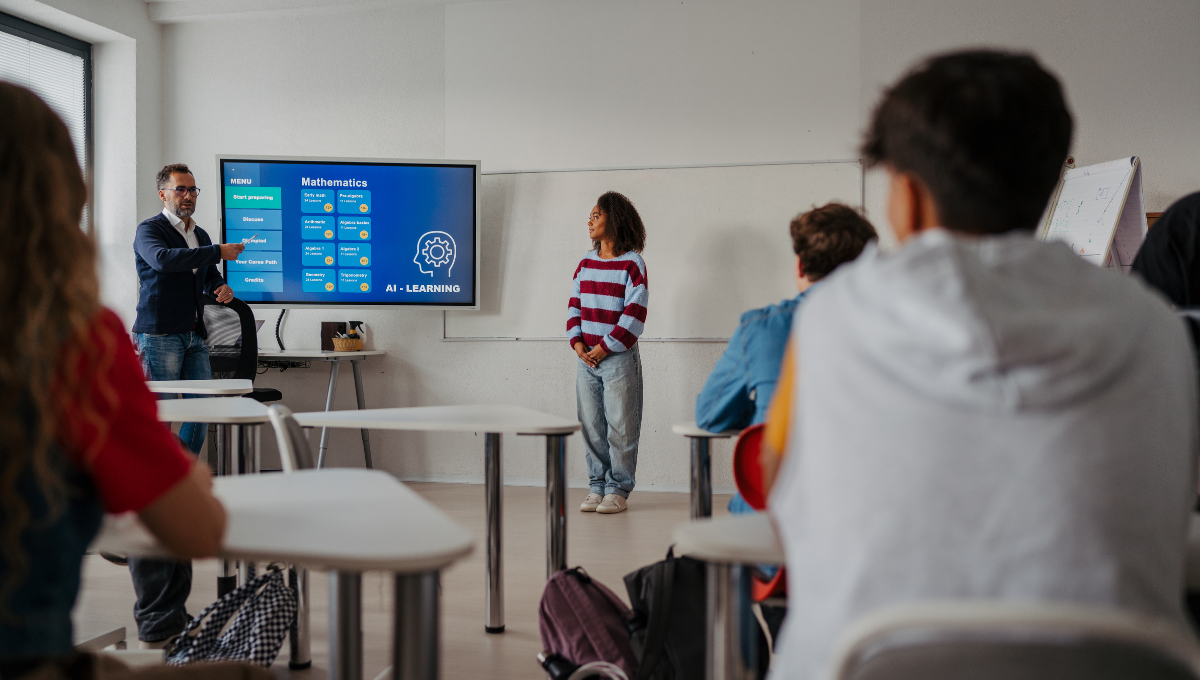
AI in Education
Explore realistic, responsible ways teachers are using AI to support instruction, creativity, assessment, and learning—no prior experience needed.
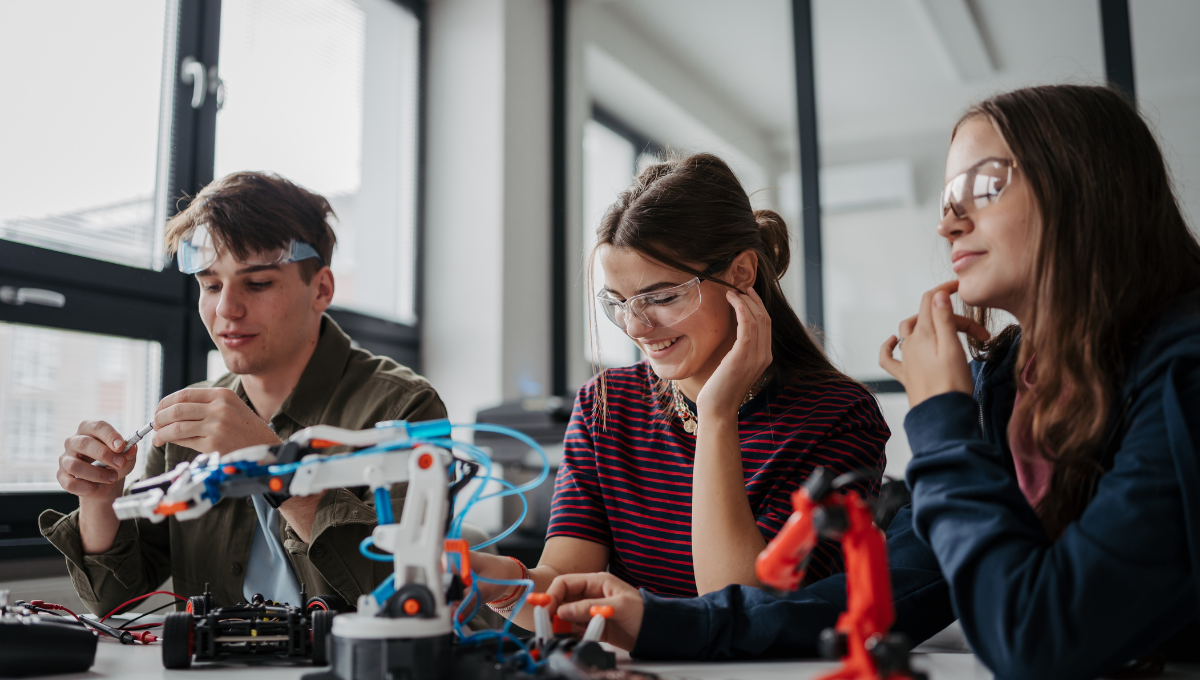
STEM, Robotics & Makerspaces
Discover hands‑on STEM, robotics, and maker activities that build curiosity and problem‑solving skills.

Evaluation & Curriculum
Learn how innovative teaching approaches align with curriculum expectations and assessment practices.

Land‑Based Learning
Explore place‑based learning strategies that deepen student connection and support culturally responsive education.
Key Summit Highlights

Educator Showcase
The Educator Showcase highlights innovative classroom practices, projects, and ideas from educators across districts. Showcases may include AI‑supported learning, STEM and maker projects, curriculum integration, land‑based learning, digital tools, and student‑centered initiatives.
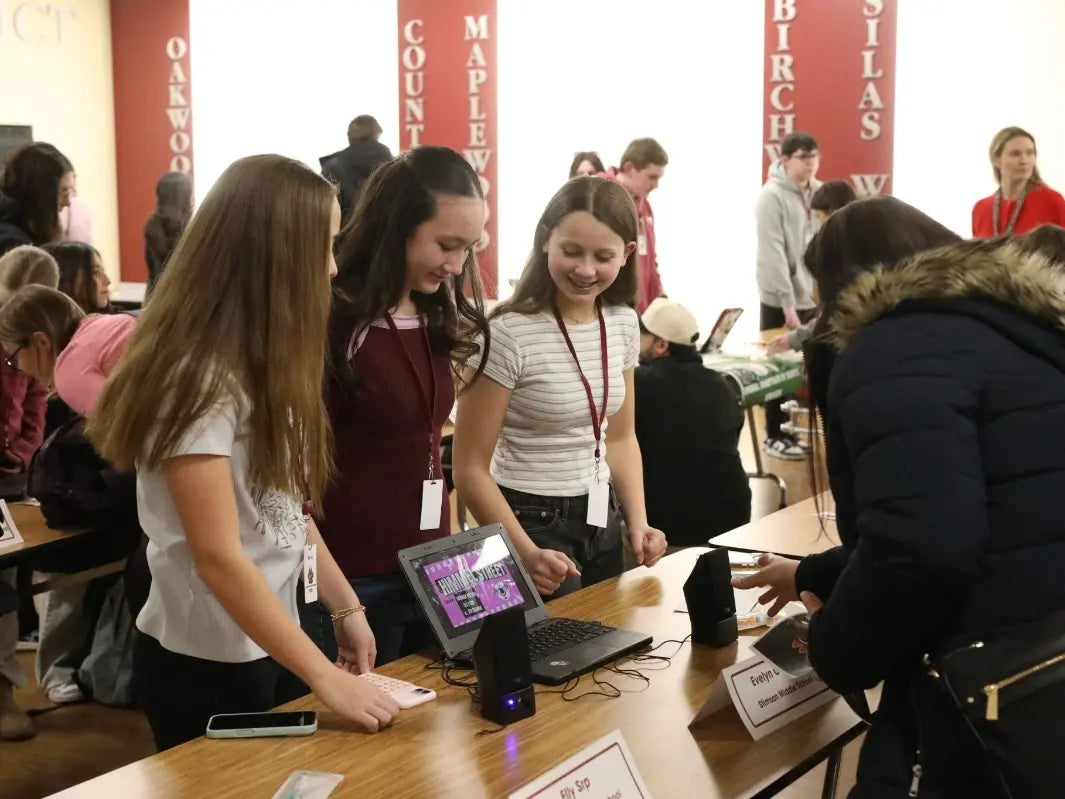
Student Pannel
highlighting student voice, perspectives, and experiences with learning, technology, and innovation.
Steering Committee

Jordan Smith (CHAIR)
Subject Coordinator
Anglophone East School District, NB
Sarah Rankin
Digital Innovation Lead
Government of New Brunswick

Brenda Cameron
Coordinator of Curriculum & Instructions
Anglophone School District West, NB
Nick Baskwill
ICT Consultant
Government of Nova Scotia

Chris Cocek
Technology Integration & AI Lead
Halifax Regional Centre for Education, NS

Laura Kennedy
Technology Integration Lead
Halifax Regional Centre for Education, NS

Sam Livinstone
Education Technology Leader
Government of PEI
Dylan Mullally
Vice-Principal
Public Schools Branch, PEI
Tony Hillier
Program Development Specialist
Government of Newfoundland and Labrador

John Goldsworthy
Program Specialist - Technology Education
NLSchools, NL

Venue
The 2026 Atlantic Innovative Education Summit will be hosted at the Four Points by Sheraton (40 Lady Ada Blvd, Moncton, NB E1G 0E3)
Four Points by Sheraton (40 Lady Ada Blvd, Moncton, NB E1G 0E3) is offering a hotel room block at a preferred group rate until March 16th, 2026.
Travel Discount
Air Canada is proud to serve as a preferred travel partner for our event. Attendees can enjoy a discount off eligible fares across Air Canada’s extensive network.
How to Book
- Book your flights at aircanada.com
- Enter the Promotion Code : CQTDEJX1
- Discount applies only when the promotion code is entered at time of purchase
Frequently Asked Questions
What’s the difference between Leadership Day and Educator Day?
May 7 – Leadership Day is invite-only, focused on strategic conversations, provincial sharing, and shaping future initiatives.
May 8 – Educator Day is open to all educators, featuring hands-on workshops, practical classroom strategies, and peer networking.
How much does it cost to attend?
- Leadership Day: Invite-only
- Educator Day: $199 per educator (District bulk pricing available)
Who is the Explore Summit for?
The Explore Summit is designed for education leaders and educators across Atlantic Canada who are interested in STEM, AI, and meaningful technology integration in teaching and learning.
Is this a one-time event or part of a larger initiative?
The Annual Explore Summit is part of the Atlantic Innovative Education initiative, a year-round initiative that includes an online professional learning community to continue collaboration, sharing, and growth beyond the two days.
Do I need prior experience with STEM or AI to attend?
No prior experience is required. Sessions are designed to be accessible, practical, and relevant, whether you’re just starting or already integrating STEM and AI into your work.